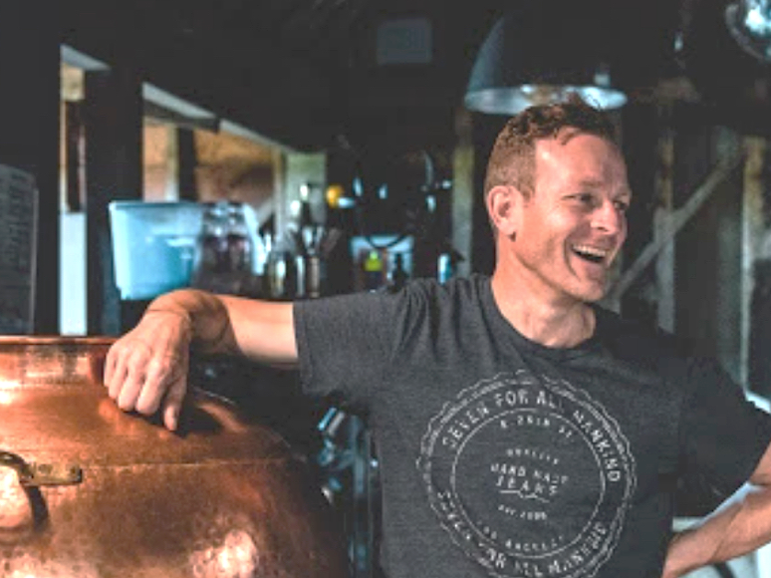
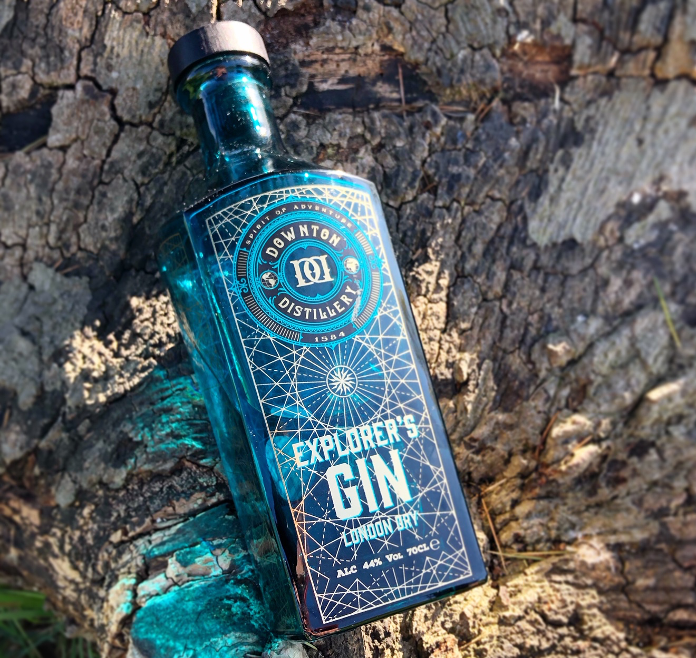
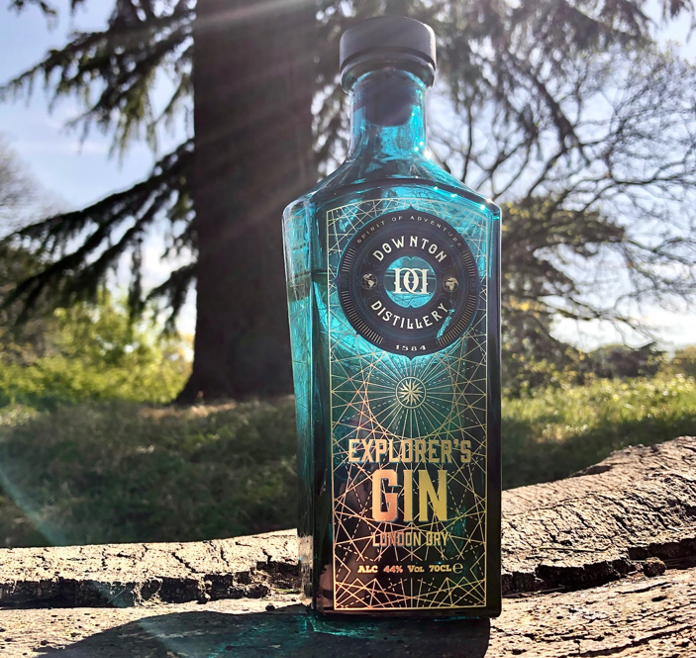
What did you do before creating your distillery and gin? I have been lucky in that I have had a career that has allowed me to travel around the world and to be influenced by its sights and sounds. Originally, I served in the military, and then worked for a series of travel agencies before working within mobile telecoms for the last few years. All of these roles provided me the skills to set up and create Downton Distillery. What made you decide to create your distillery? The ember was sown when I took Meike (my partner), whose drink of choice has been gin for many years, to a gin making course at the City of London Distillery for her birthday. I was fascinated by the whole experience, the history, the chemistry aspect and being able to create something unique and subsequently drink it! Following this course, I got our first alembic still and started experimenting and learning as much as I could about the whole process. What's the inspiration behind your gin? Wiltshire has a rich tapestry of history dating back to the Middle Stone Age. A prehistoric settlement was found in the area of Downton dating back to 4,000BC. Since then the Romans, Britons, Saxons, Vikings and Normans have all found themselves within this small village. However, the inspiration came from a character who was an adventurer, explorer, privateer, soldier, poet and a court favourite of Queen Elizabeth 1; his name was Sir Walter Raleigh. It just so happened that Charlie who I served in the military with, owns the Manor House in Downton. It was this manor house that Queen Elizabeth graced to Sir Walter Raleigh, as his first grace and favour property. In 1584, Queen Elizabeth I provided him with a warrant to explore the New World, now America. When she came to stay at the manor in 1586, it was extended by Sir Walter Raleigh in order to make her stay as comfortable as possible. In order to do this, he sailed one of his ships up the Avon to Downton, where it was dismantled, and the timber was used to build the great hall and the chapel room. What is the inspiration behind Explorer's Gin's stunning bottle? Our beautiful bottle tells the story of the ‘Golden Era of Discovery’ where Sir Francis Drake and Sir Walter Raleigh established new trade routes, that eventually allowed Britain to become a maritime sea power. From these trade routes Raleigh brought back tobacco and potatoes from America. The navigation lines, the rose compass and the blue ocean colour reflect this spirit of adventure. Can you tell us more about the botanicals in Explorer's Gin? Our unique botanical is Western Red Cedar, which came back from America in 1852. The Native Indians called it the ‘Tree of Life’, as they used it for medicine, cooking, tea, clothing and to build their canoes. It grows in the distillery garden and is freshly cut before every distillation. Raleigh, on his last expedition was looking for the fabled city of gold, ‘El Dorado’ in the 17th century. Our association to South America is the pink pepper corn, which originated from Peru. The use of citrus also pays tribute that in the 1700s a cure was found to scurvy. Scurvy was a cocktail of vitamin deficiencies, mainly of C and B, which was referred to as ‘the plague of the sea’ and resulted in huge mortality rates.
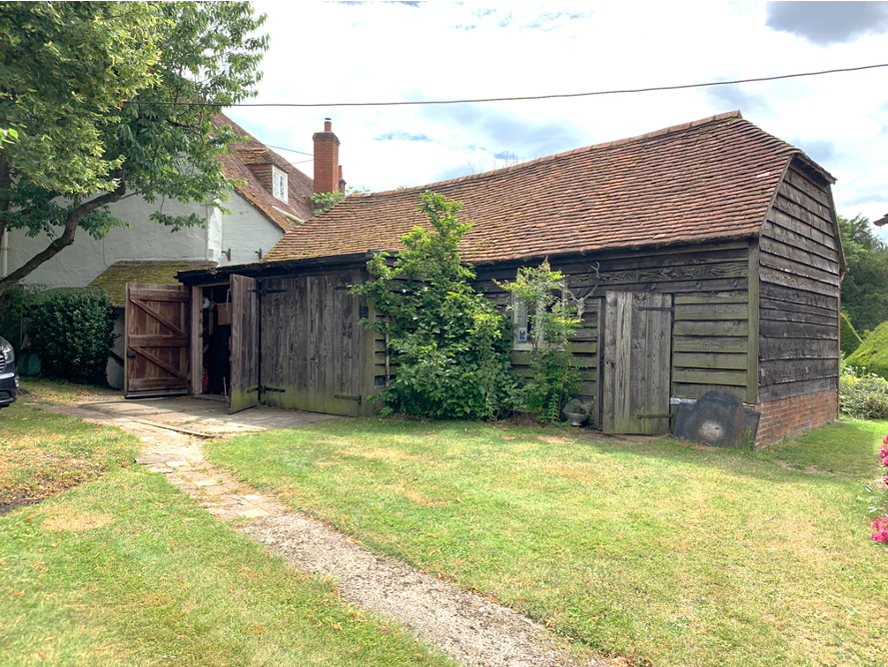
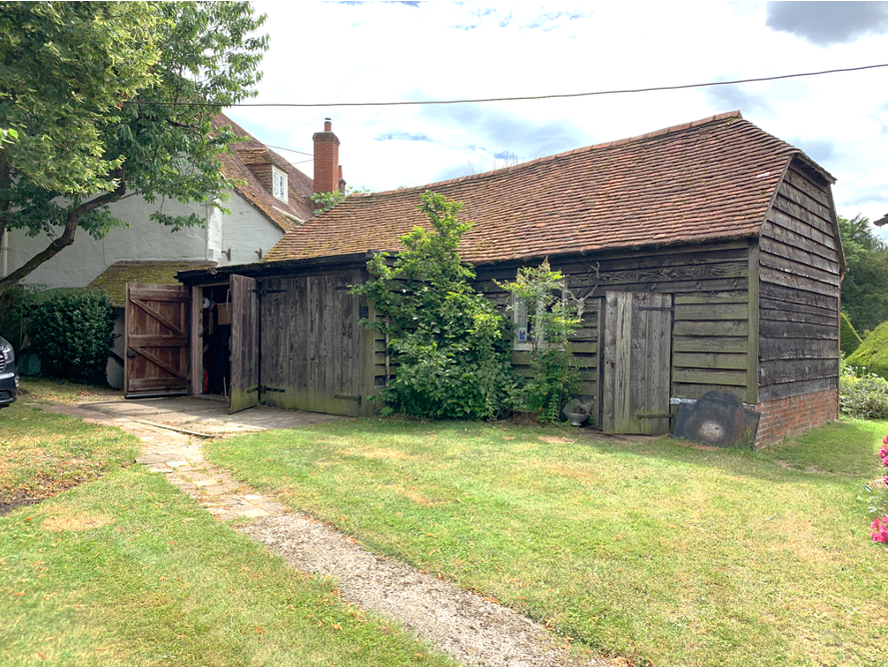
Can you tell us more about Downton Distillery? The distillery is situated in a wooden, Grade 1 listed barn, which meant we couldn’t alter the physical structure when designing the set up. This provided some challenges as a structure had to be built within the distillery to provide the framework. Wooden panels surround the distillery alongside an original beam from Raleigh’s boat. The distillery has plenty of charm and character and is a wonderfully quiet place to work, but can be bitterly cold in the winter as there are no radiators (except for the still, which gives off a bit of heat). Our still is called the Ark Royal, which was the name of the Queen’s first flag ship. Sir Walter Raleigh built it in 1586, and it was named Ark Raleigh, but due to the Spanish threat gave it to the Queen who then renamed it Ark Royal, following the convention at the time where the ship bore the name of her owner. Can you tell us more about the distillation process? I am operating a 100L Copper Alembic still and use both direct and vapour infusion to create Explorer's Gin. The botanicals are macerated for around 14 hours before the charge is heated slowly; fresh botanicals including lemon, orange, grapefruit and western red cedar are added prior to conducting the final distillation. Being a micro distillery, we are producing 100 bottles per batch and those who come and help me bottle get to sign the entire batch. It is a great way to de-stress and relax. Once the lockdown is over we will post on Facebook when the next bottling session is – there have been lots of requests from volunteers. What have been the biggest challenges so far? In setting up there were numerous challenges. Having a background in programme management, the planning side was straight forward, but as everyone knows, the best plans can quickly come undone. ATEX (Explosive Atmospheres) was an area that I have never heard of before building the distillery. My learning curve was 0 – 100 mph in seconds (well – days!). Also, having a narrow gravel driveway does not help when 16-wheeler lorries turn up with deliveries that a smaller van could carry. What have been the biggest achievements so far? Our greatest challenge and achievement to date is fighting the current pandemic. As Covid-19 started to hit the headlines those within the distilling sector started asking how we could legally start making hand sanitiser without paying the ‘excise duty’ on it (alcohol tax). Lobbying was done and HMRC finally allowed us to start helping those on the front lines, care homes, schools, local communities towards the end of March. Downton Distillery has run a series of hand sanitiser points across local communities in Hampshire, Wiltshire, Dorset and London, where people can turn up and take up to 100ml of hand sanitiser for their home. All we have asked for is a small donation to cover the base costs. You can find where the points are on our website, including timings and stock levels. It is wonderful how the local communities have pulled together to help each other through this pandemic. Everyone has a part to play no matter how big or small and I take pride in having been able to help those in need.
How would you describe Explorer's Gin in 3 words?
Voyage of discovery What's your favourite way to drink your gin? With Explorer’s I gin love experimenting with the different types of Negroni. There is another gin in our range that only appears a couple of times a year called 'Chilli Tails'. This uses the tail end of the distillation processes where the earthier flavours are. This then gets smoked with Chipotle chilli and ginger. It makes the best Bloody Mary! What gins would you always have on your gin shelf (other than your own of course!)? There are a couple of gins that I absolutely love. The first is St George Terroir. Its smell transports you into an evergreen forest, with beautiful scents of pine and a stunning fresh taste. As I started out, this gin inspired both my approach and style. Bobbies Gin is another favourite. This is an unusual gin with lemon grass, lemon and spice overtones and menthol and rose undertones. It is smooth and dances on your tongue, something that I enjoy sharing. What's next for Downton Distillery - any exciting plans? Current circumstances have thrown a spanner into our plans and I know we are not the only distillery that has been impacted. I hope that everyone gets through this and is able to pick up the pieces on the other side and continue with what they were wanting to do. Also Read...
Comments are closed.
|
 RSS Feed